Fun science games for year 3
2nd grade covers properties of materials, how landscapes change fast (eruptions) and slow (erosion), and what plants need to grow. It's the year 'let's find out' becomes a habit — games where kids change one thing and watch the result fit perfectly.
Each plant part has a distinct job, and roots, stems, leaves, flowers, and seeds work with sunlight, water, and air to help the whole plant live, grow, and begin a new generation.
Weather WatchScience · Ages 4-9Weather clues such as clouds, temperature, wind, and repeating observations help us describe current conditions, prepare sensibly, and make simple forecasts that are predictions rather than promises.
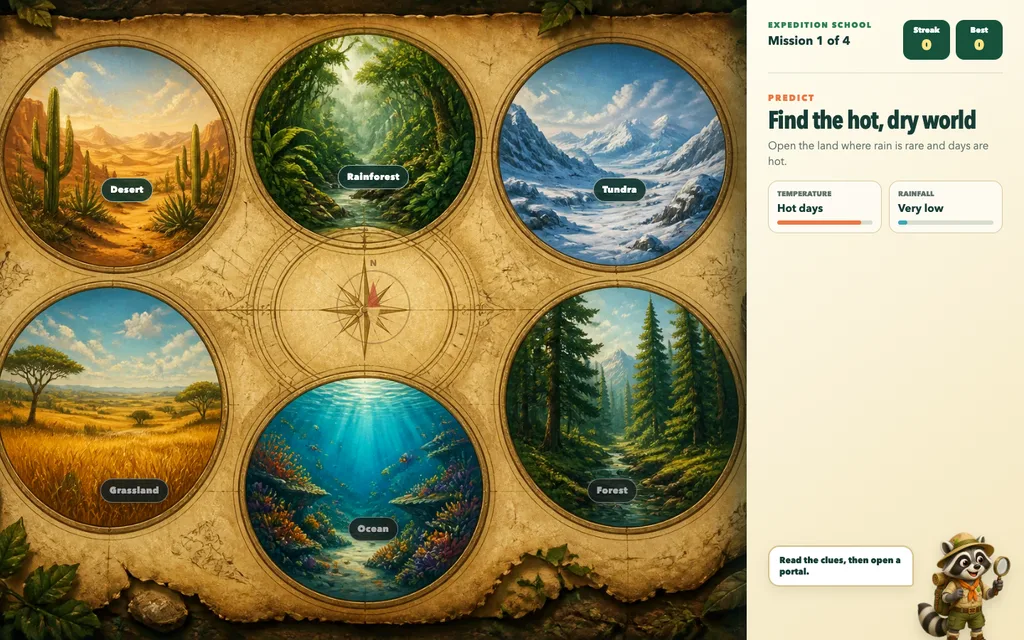 Biome ExplorerScience · Ages 7-13
A biome's long-term temperature and rainfall shape its vegetation, which determines which plants, animals, and food chains can survive there.
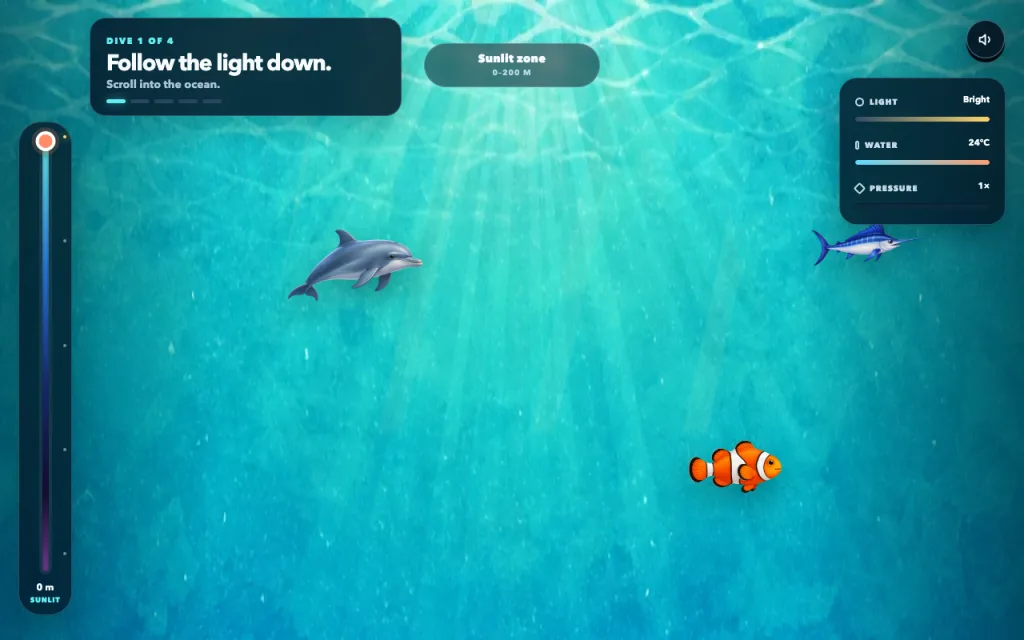 Ocean DeepLife and Earth Science · Ages 7-12
The ocean changes in zones with depth: sunlight fades, temperature falls, and pressure rises, so animals need different adaptations to live at different depths.
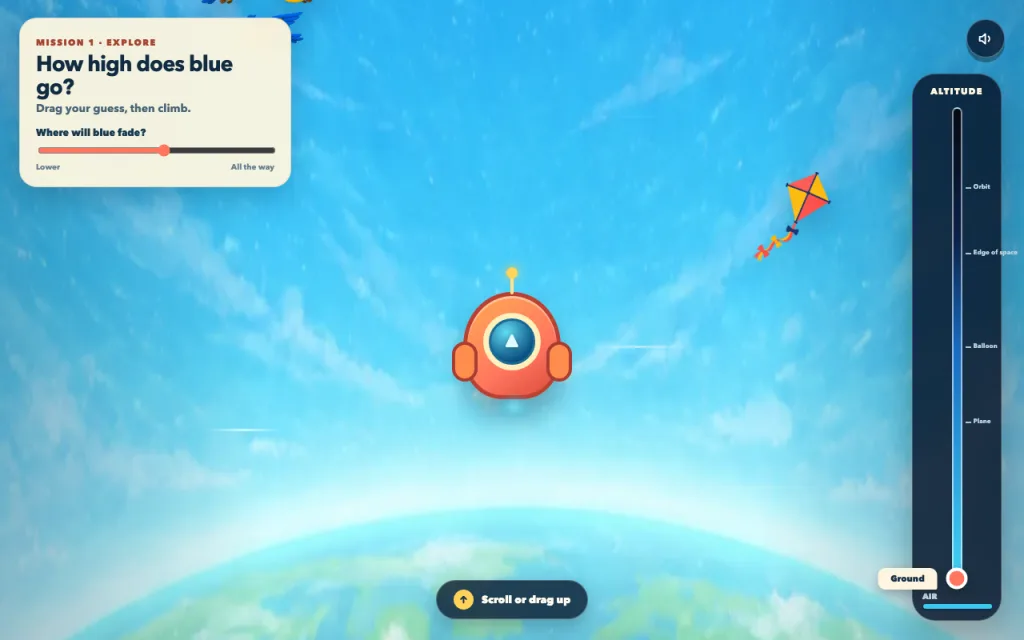 Sky HighEarth and Space Science · Ages 7-12
As altitude increases, Earth’s air gets gradually thinner: birds and airplanes need enough air, balloons rise into thin air, and satellites orbit above almost all of it.
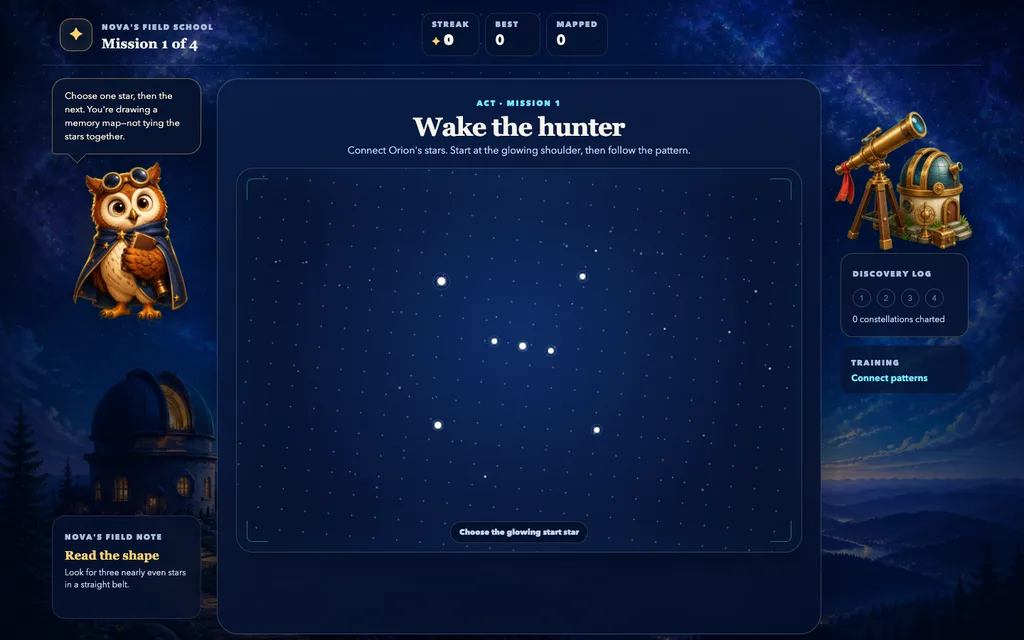 Star MapperScience · Ages 7-13
Constellations are recognizable patterns we see from Earth: their stars are real, but the connecting lines are imaginary guides, and hemisphere and season change which patterns are easiest to find.
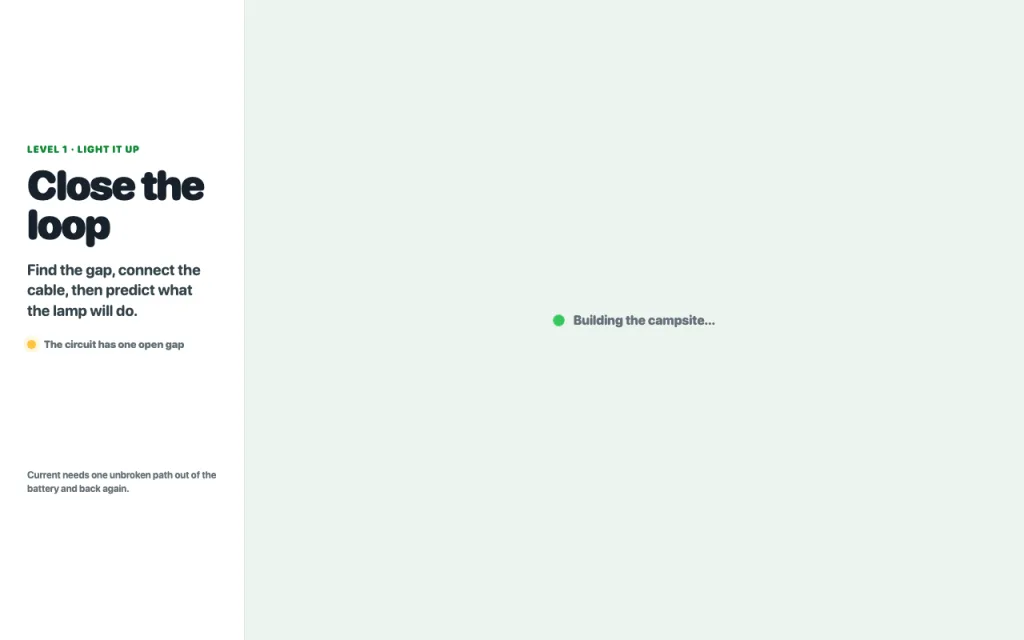 Circuit RescuePhysics · Ages 8-11
Electric current flows only around one complete, unbroken loop; a switch controls that loop but is not the same as a broken wire, and every component in a series circuit shares the same route.
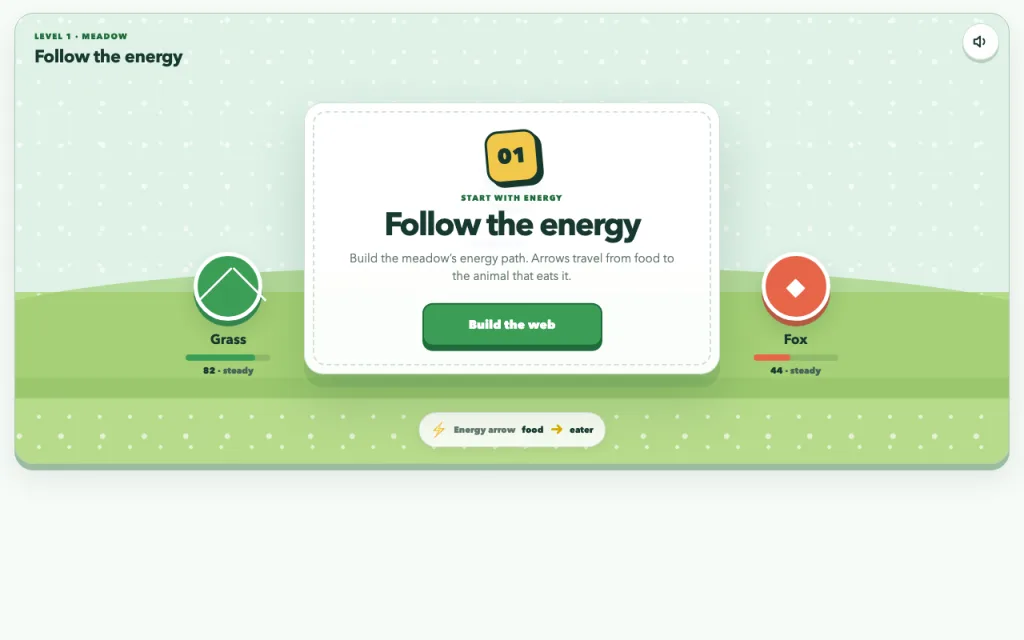 Food Web BalanceBiology · Ages 8-13
Plants, plant-eaters and predators keep each other in check, so adding or removing one species ripples through the whole food web — even to species it never touches.
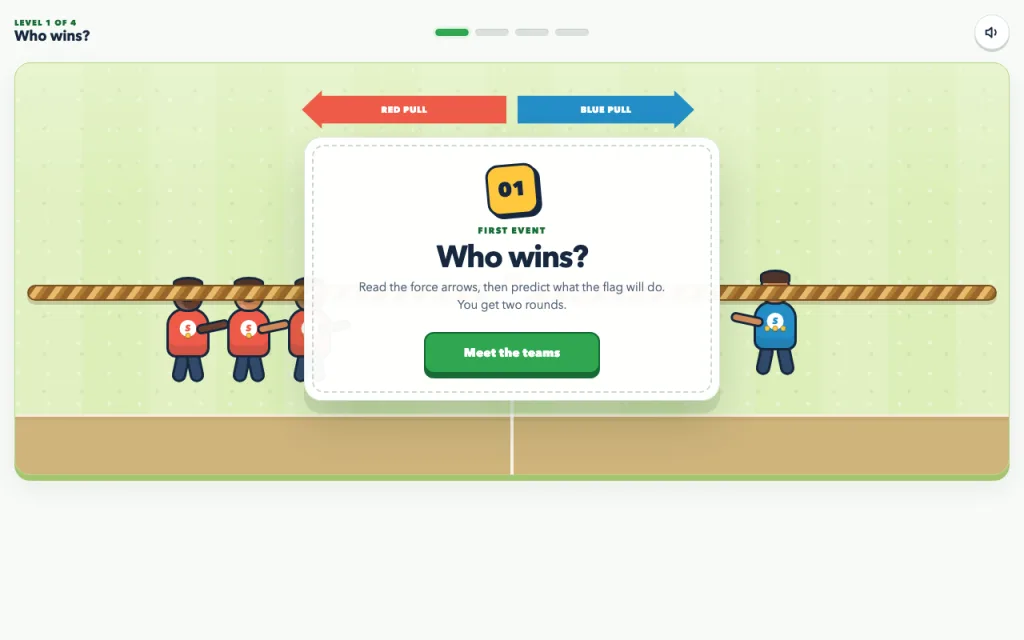 Forces Tug of WarPhysics · Ages 8-11
Equal opposing forces balance and keep an object still; when one opposing force is bigger, the object moves in that force's direction, regardless of headcount.
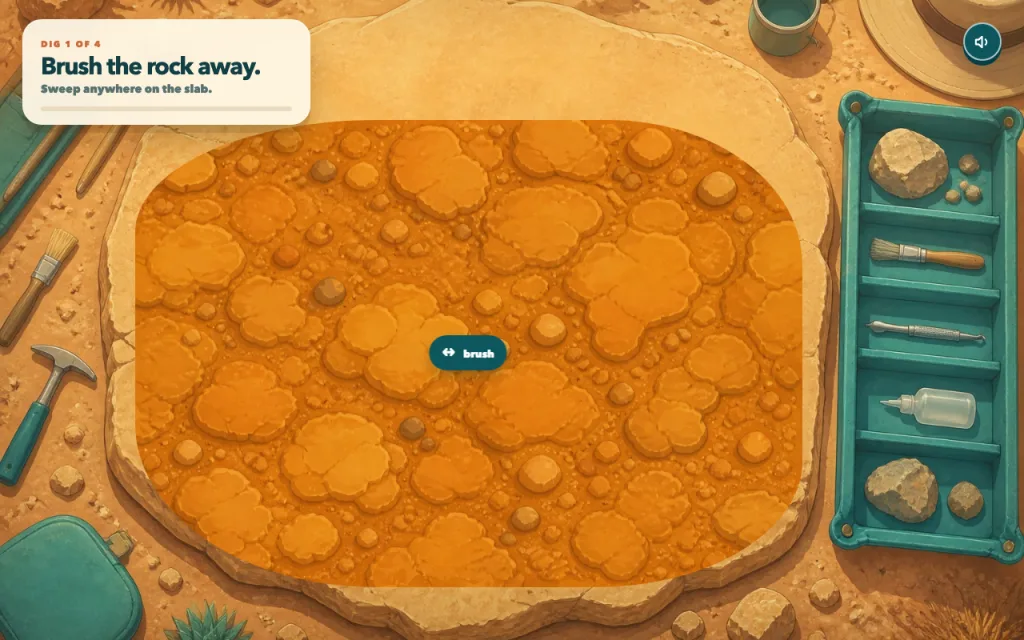 Fossil DigEarth and Life Science · Ages 8-12
Fossils are clues preserved in rock; palaeontologists carefully uncover their shapes and positions, then fit that evidence together to infer what an extinct animal looked like.
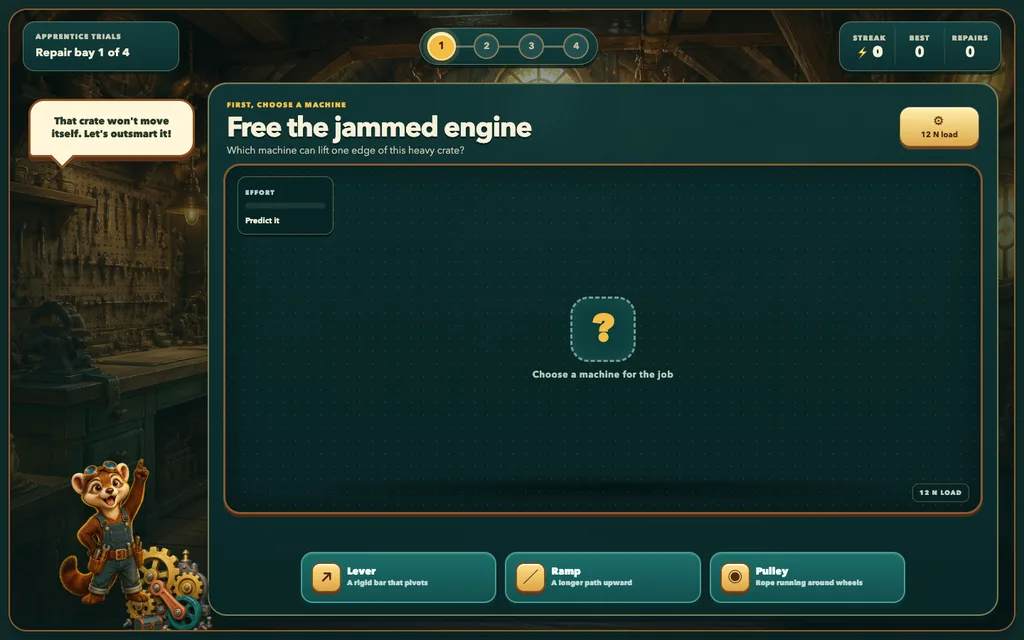 Moss & Cog WorkshopPhysics · Ages 8-13
Simple machines make jobs easier by trading force for distance or changing the direction of a force; they do not remove the load's weight or create energy.
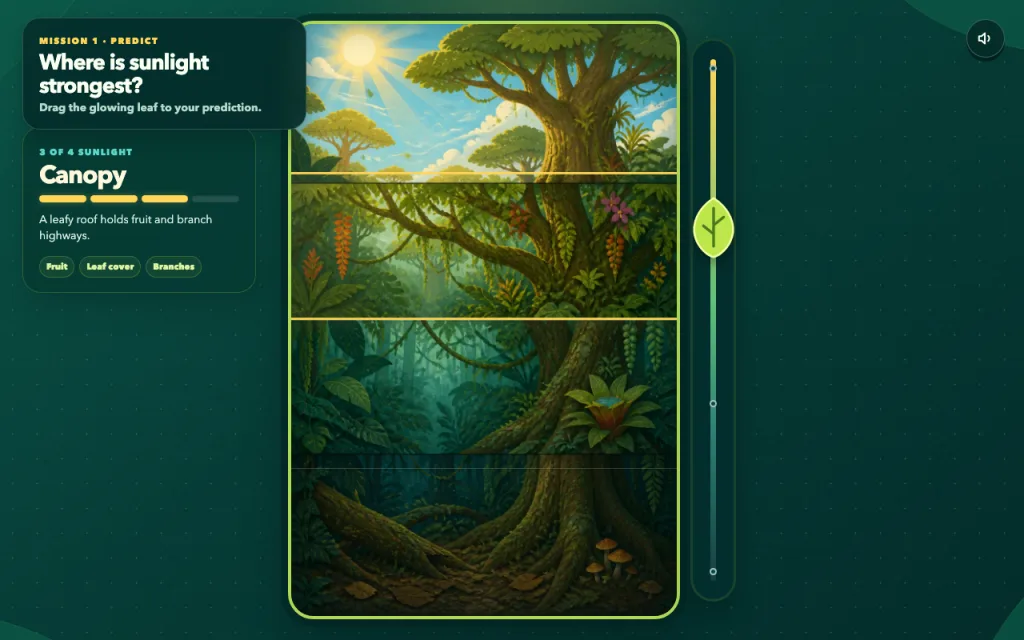 Rainforest LayersEcology · Ages 8-12
A rainforest has four vertical layers, and different animals fit each layer because light, food, movement routes, moisture, and safety change from top to bottom.
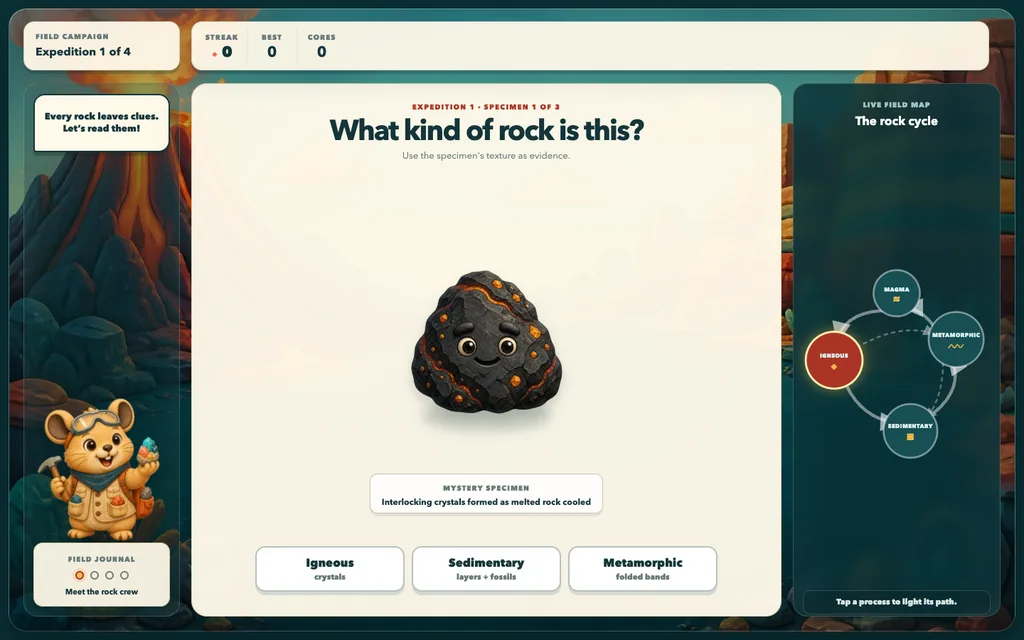 Rock RoverEarth Science · Ages 8-13
Rock types are stages in a cycle: cooling makes igneous rock, surface weathering plus deposition and cementing makes sedimentary rock, heat and pressure make metamorphic rock, and melting returns rock to magma.
Getting the most out of science games at this age
- Always get the prediction first — 'what do you think will happen?' turns play into an experiment.
- Wrong predictions are the good ones. Celebrate the surprise, then ask what changed their mind.
- Connect the game to the kitchen: melting butter is states of matter, a bath drain is a force, dinner is a food chain.
Common questions
What science skills should year 3 learn?
2nd grade covers properties of materials, how landscapes change fast (eruptions) and slow (erosion), and what plants need to grow. It's the year 'let's find out' becomes a habit — games where kids change one thing and watch the result fit perfectly.
Are these games free?
Every Ako lesson here runs in the browser, and your first one is completely free — no account, no card. A subscription unlocks the full catalog of 100+ lessons.
How are Ako lessons different from other learning games?
Ako — a voice AI tutor — is inside every game. He sees what your child does, asks for predictions before they act, and adapts his coaching to their age. Parents get a weekly note about what actually clicked.