Fun learning games for 1st grade
First graders are cracking two codes at once: reading (blending sounds into words) and numbers (adding within 20, tens and ones). The games below cover both, plus the science of noticing — light, sound, what living things need.
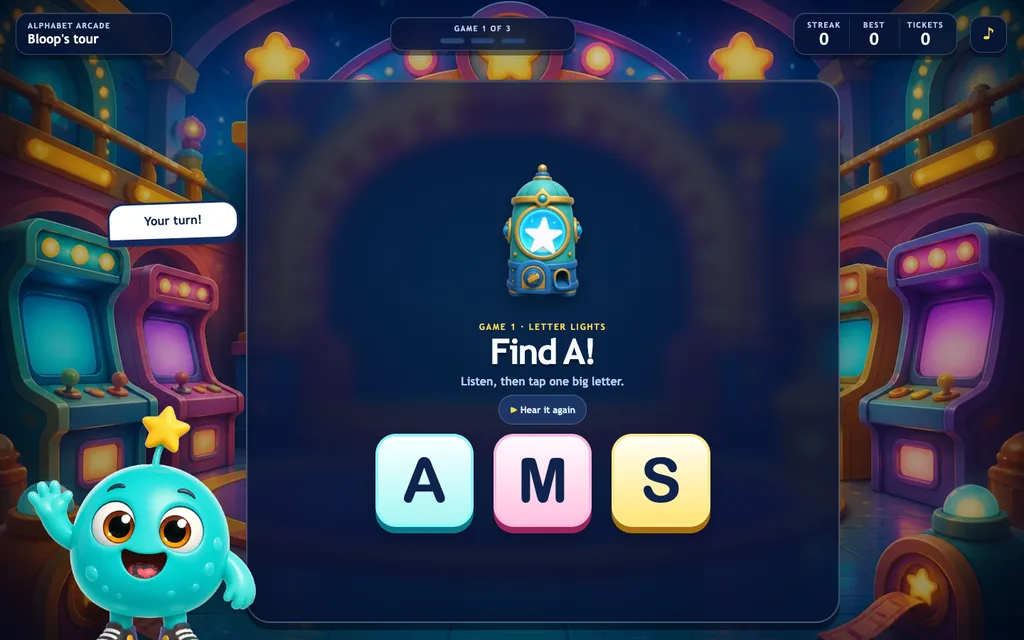 Alphabet ArcadeEnglish · Ages 4-6
A letter keeps its identity when it is uppercase or lowercase, and its sound helps us recognize words that begin with it.
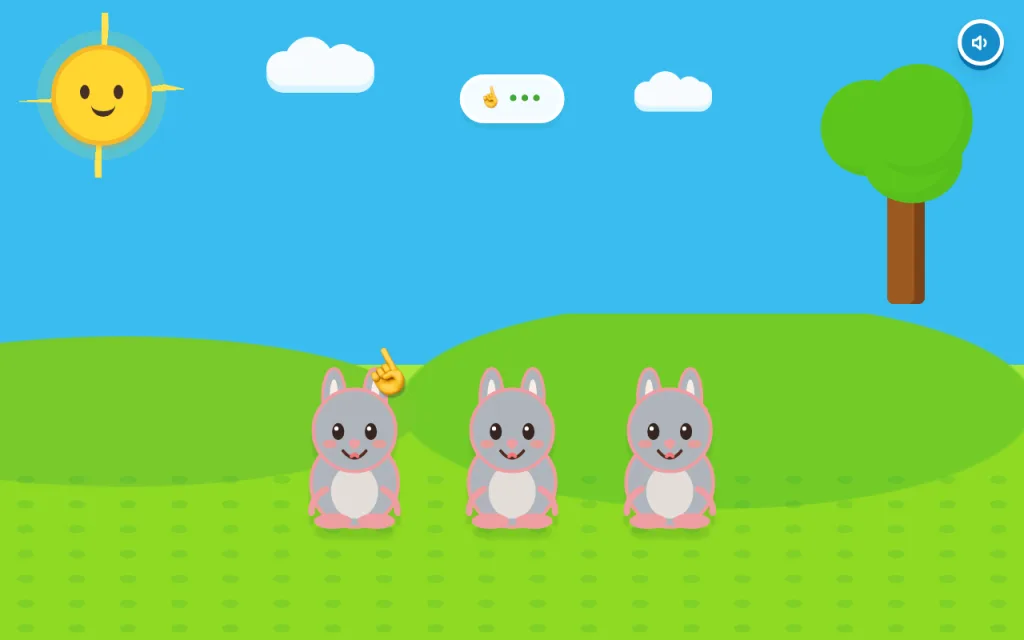 Counting CrittersEarly Mathematics · Ages 4-6
Counting tells how many: give each thing exactly one number, and the last number counted is the total.
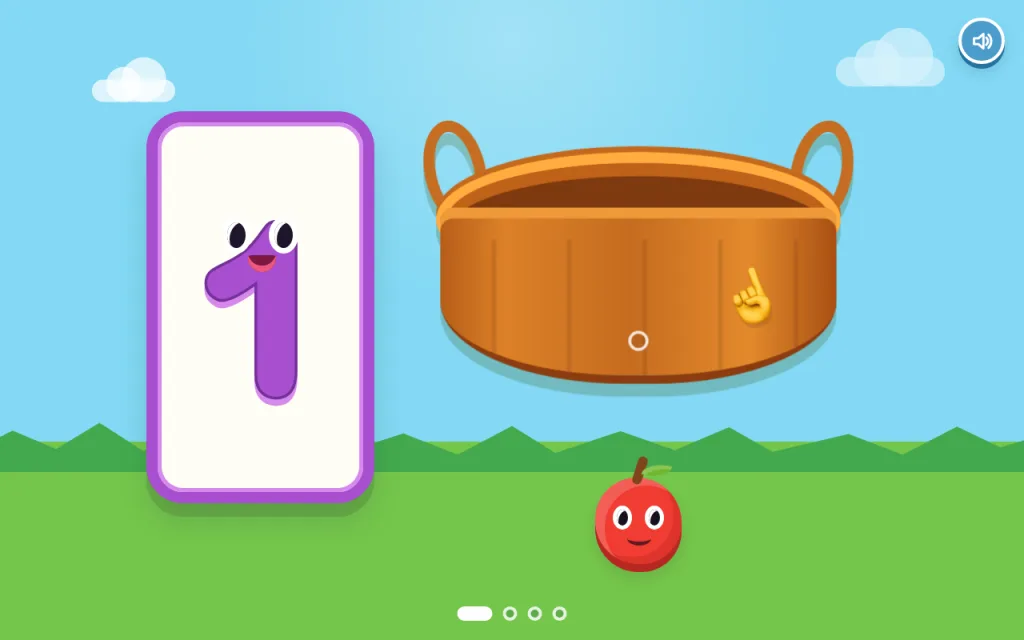 Number FriendsEarly Mathematics · Ages 4-6
Each numeral stands for an amount: the numeral 3 means three things.
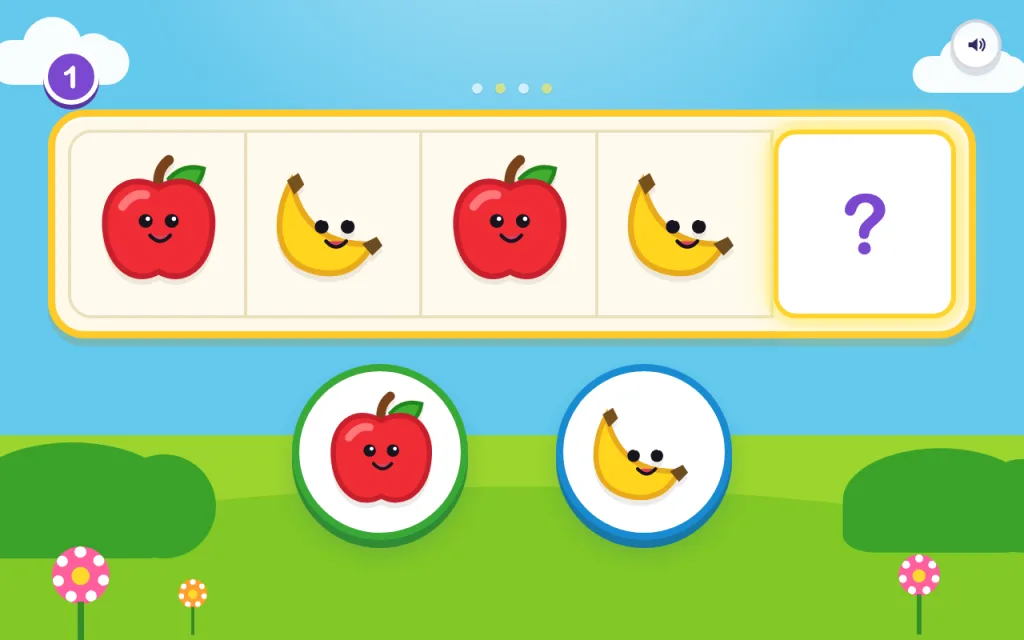 Pattern PartyEarly Mathematics · Ages 4-6
A pattern repeats; once you spot the repeat, it tells you what comes next.
Plant PartsScience · Ages 4-9Each plant part has a distinct job, and roots, stems, leaves, flowers, and seeds work with sunlight, water, and air to help the whole plant live, grow, and begin a new generation.
Sound BlenderEnglish · Ages 4-8A spoken word appears when every letter-sound or sound chunk is blended smoothly from left to right; the same ordered sounds can be segmented to build the written word.
Trace & RaceEnglish · Ages 4-7Clear handwriting grows from starting each stroke in the right place, moving in a steady direction, and following the strokes in order.
Weather WatchScience · Ages 4-9Weather clues such as clouds, temperature, wind, and repeating observations help us describe current conditions, prepare sensibly, and make simple forecasts that are predictions rather than promises.
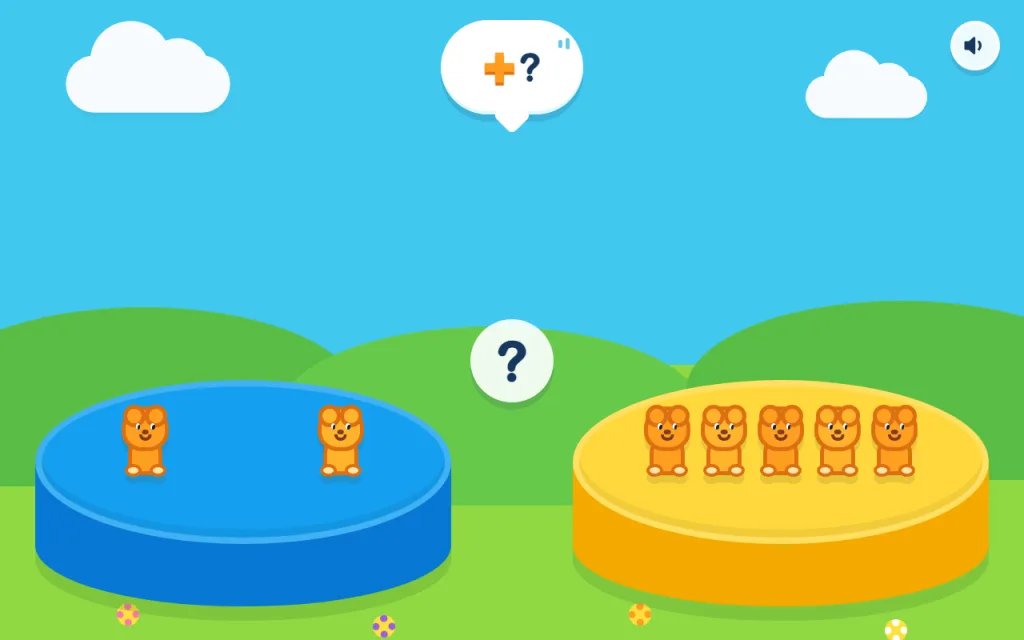 Which Has More?Early Mathematics · Ages 4-6
One group can have more, fewer, or the same number of things, and counting tells which for sure.
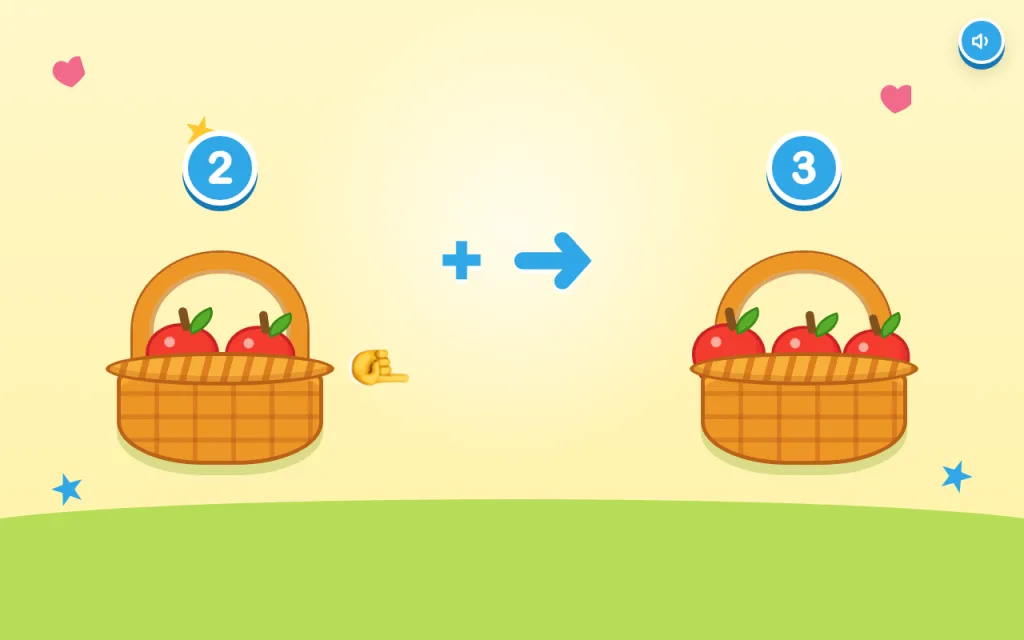 Apple AddMathematics · Ages 5-7
Adding means putting groups together and counting every object in the new whole group.
Clock QuestMathematics · Ages 5-10The short hand shows the hour and the long hand counts minutes around the clock; reading or setting both hands together makes one exact time.
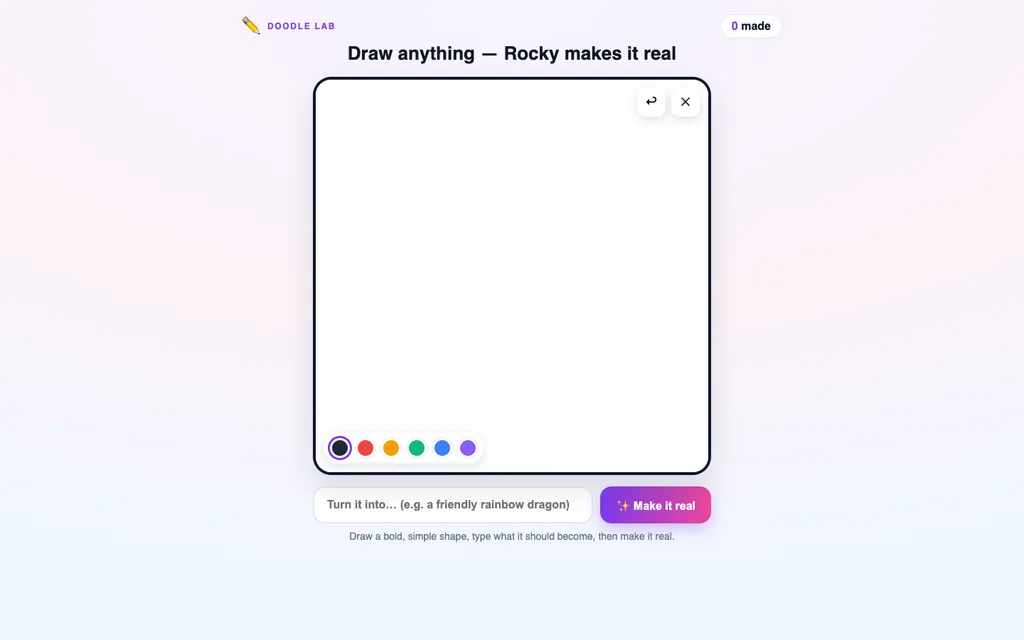 Doodle LabArt & Design · Ages 5-13
A rough sketch carries an idea; describing what it should become brings it to life.
Shape SpaceMathematics · Ages 5-10A shape keeps its identity when it turns, changes size, or appears as an everyday object; its straight sides and corners identify a 2D shape, while faces, edges, vertices, and curved surfaces identify a 3D solid.
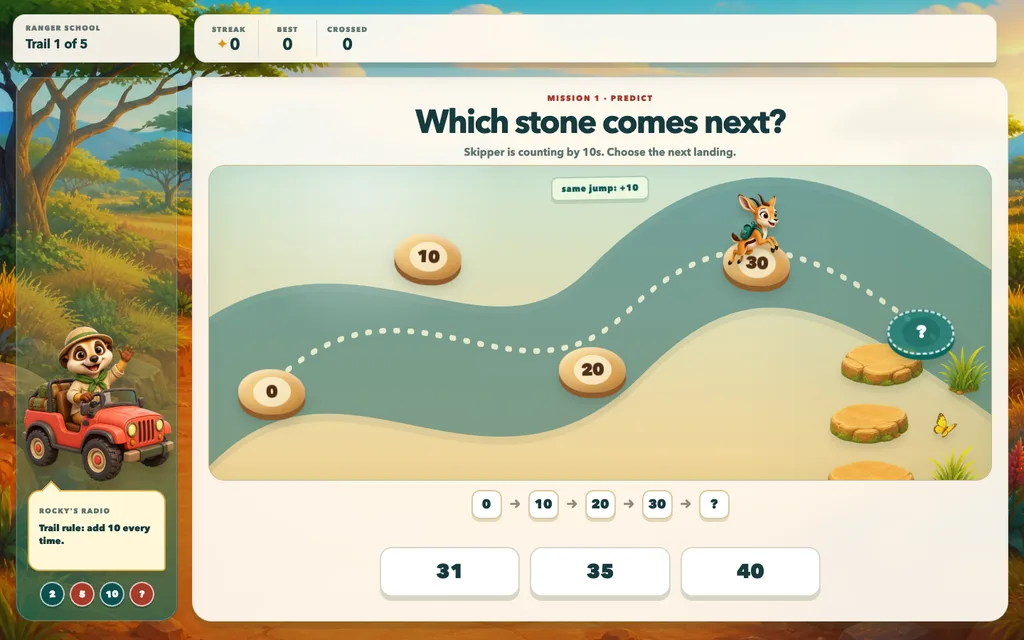 Skip Count SafariMathematics · Ages 5-9
Skip-counting makes equal jumps on the number line; each landing adds the same amount, so the number of jumps connects directly to multiplication.
Time Traveler's SuitcaseHistory · Ages 5-10Objects are historical evidence: their materials, technology, and use help us place them in broad eras from the Stone Age to today.
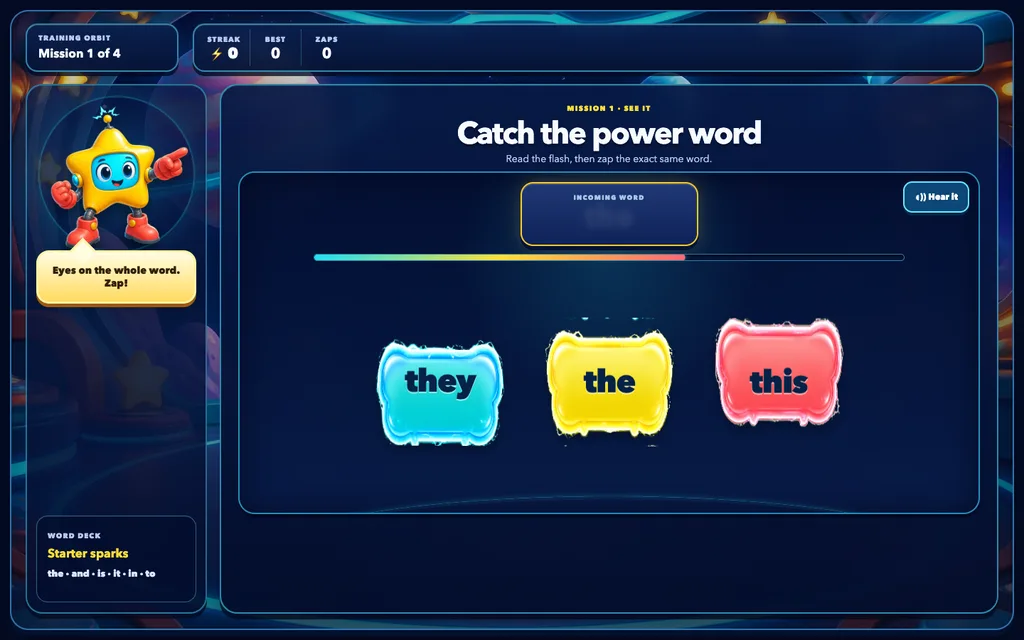 Word ZapEnglish · Ages 5-9
High-frequency words become quick to read when we recognise the whole written word, connect it to its spoken form, and practise it again after a useful gap.
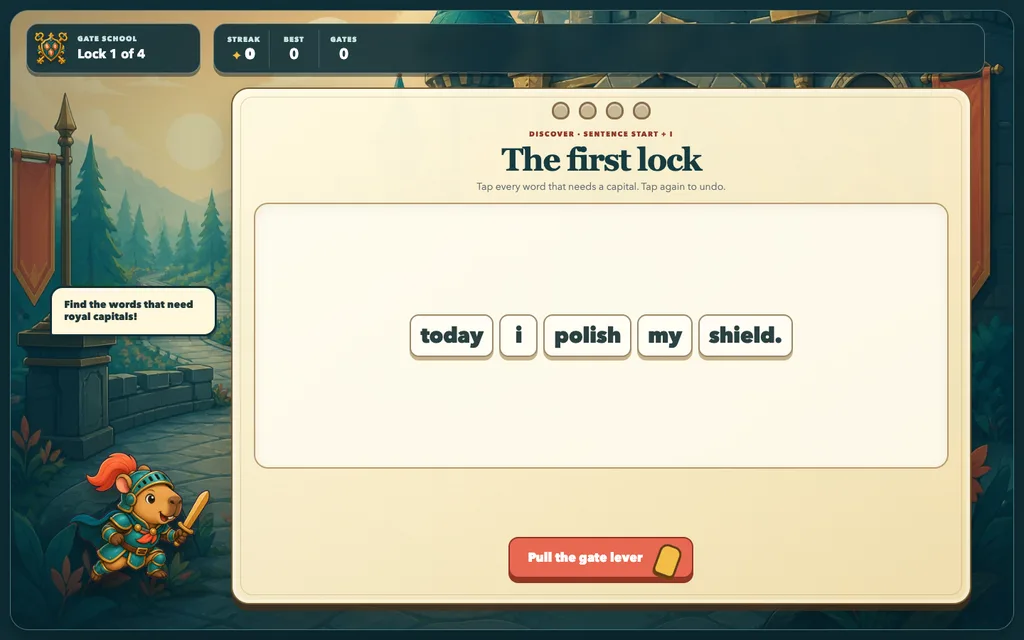 Capital QuestEnglish · Ages 6-10
Capital letters signal the beginning of a sentence and the special names of people, places, days, months, and titles; ordinary words stay lowercase.
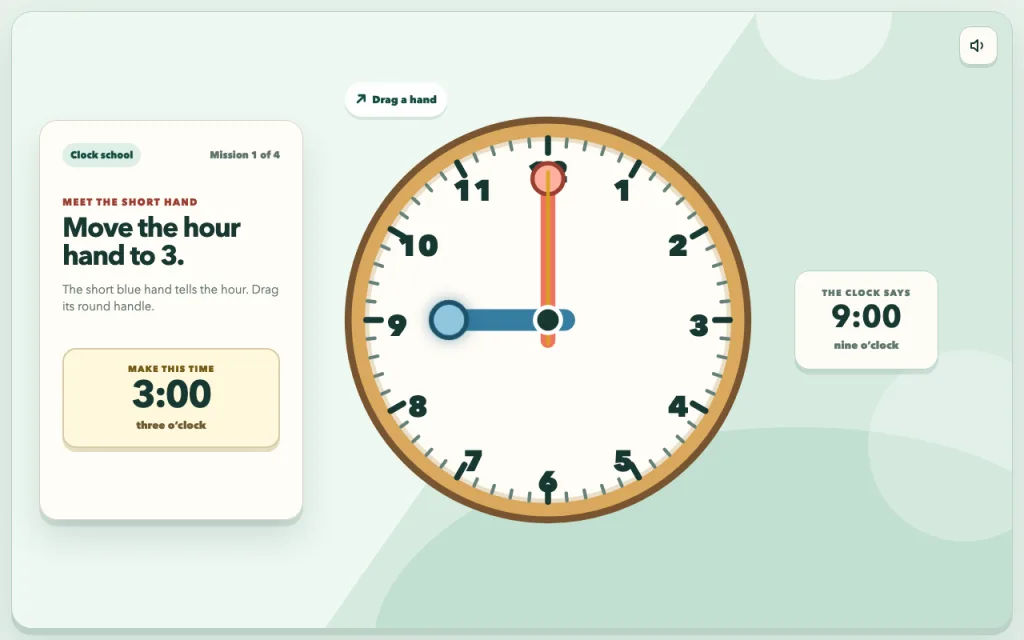 Clock WorkshopMaths · Ages 6-11
A clock’s short hand points to the hour and its long hand points to the minutes; reading both hands together tells the time.
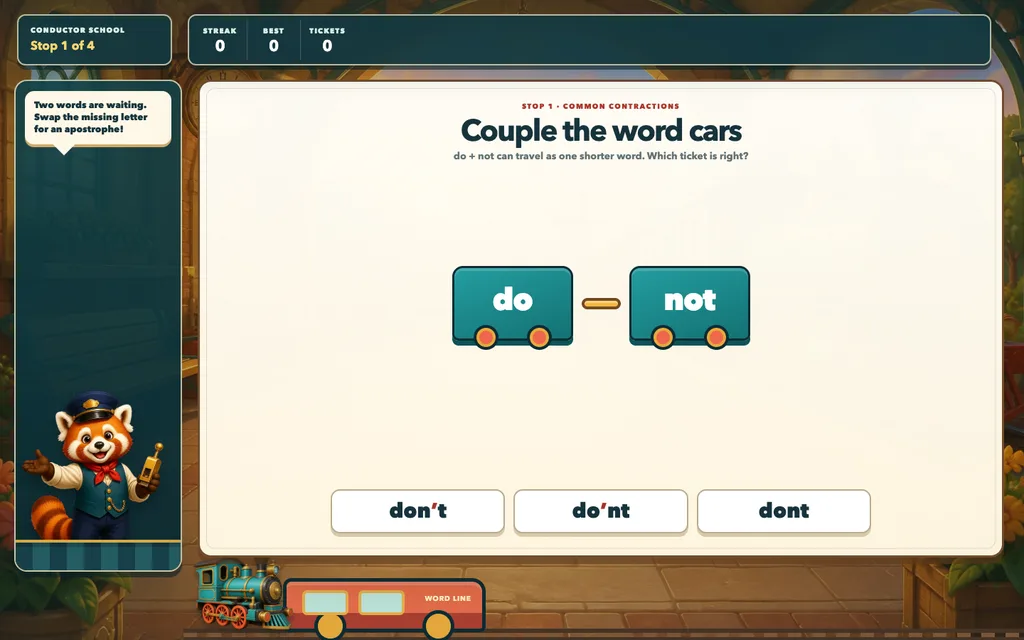 Contraction StationEnglish · Ages 6-10
A contraction joins words into a shorter form; the apostrophe stands where one or more letters were removed, while the meaning stays the same.
Dig Site DetectiveHistory · Ages 6-11Archaeologists use an artifact's material, symbols, shape, and purpose as evidence to connect it to the people and time that made it.
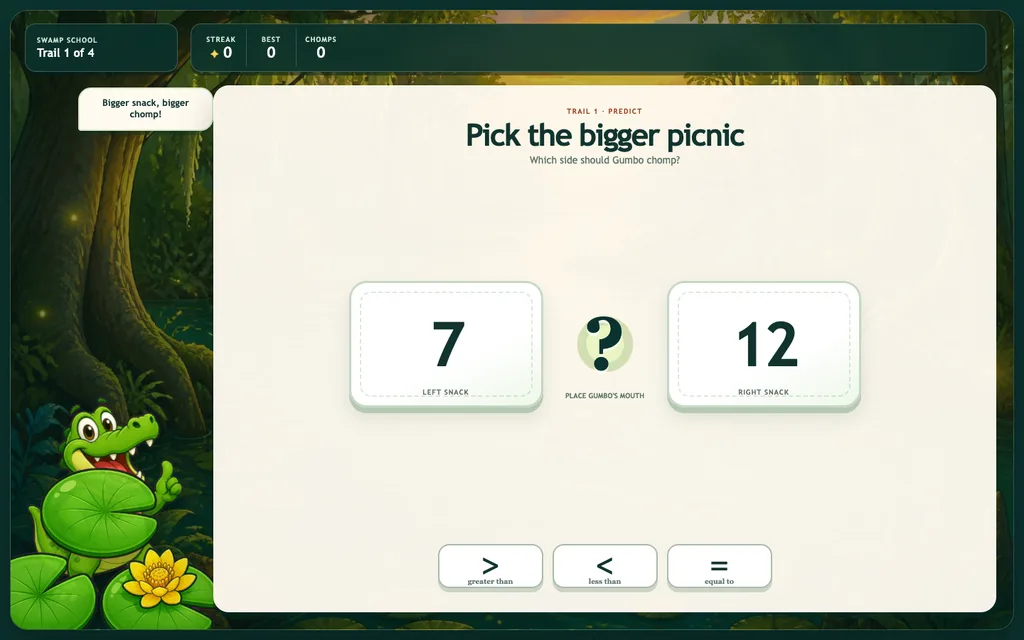 Gator ChompMathematics · Ages 6-10
The symbols > and < open toward the greater value, while = shows equal values; comparing place values lets us use the same relationship for whole numbers, decimals, fractions, and ordered sets.
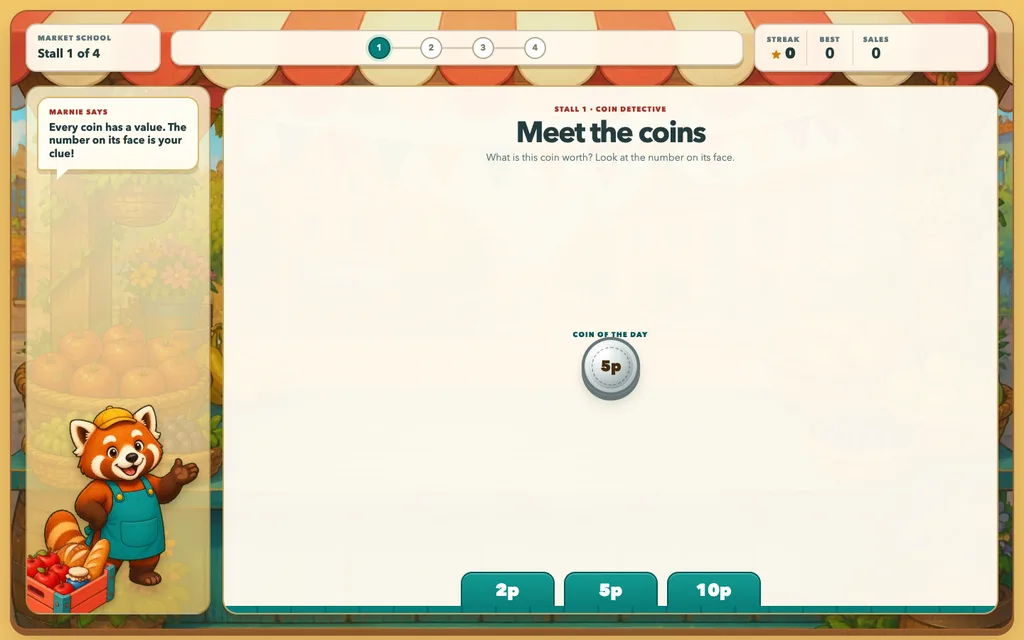 Money MarketMathematics · Ages 6-10
Money amounts are totals of coin and note values; exact payment matches a price, while change is the difference between what was paid and what it cost.
Note NestArt · Ages 6-12On a treble-clef staff, each higher line or space moves to the next letter name, while the note head tells how many beats the pitch lasts.
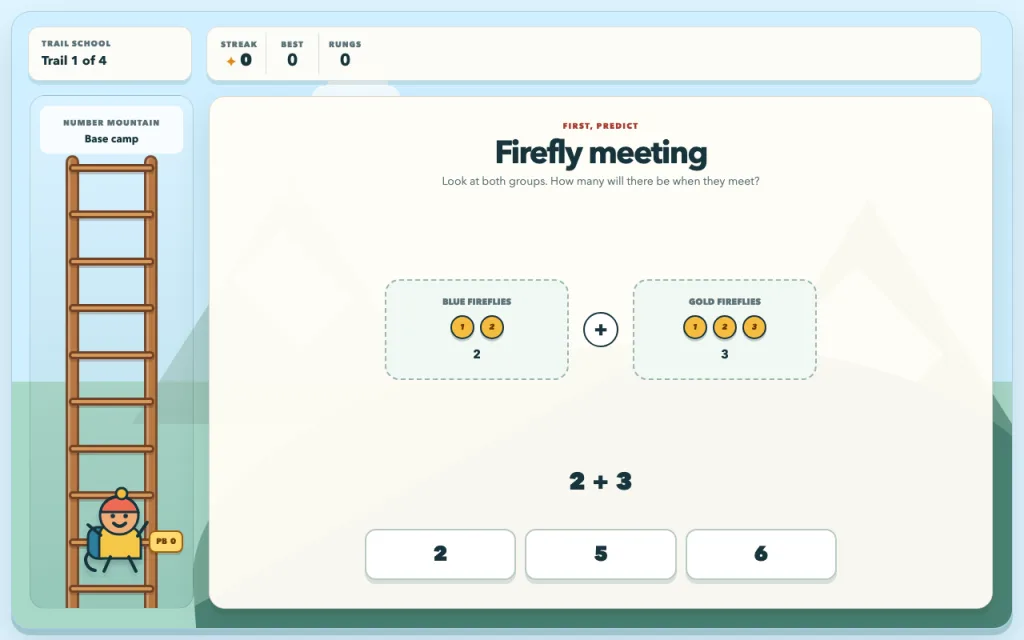 Number LadderMaths · Ages 6-11
Adding combines every member of two or more groups into one total; the groups change arrangement, but no members disappear.
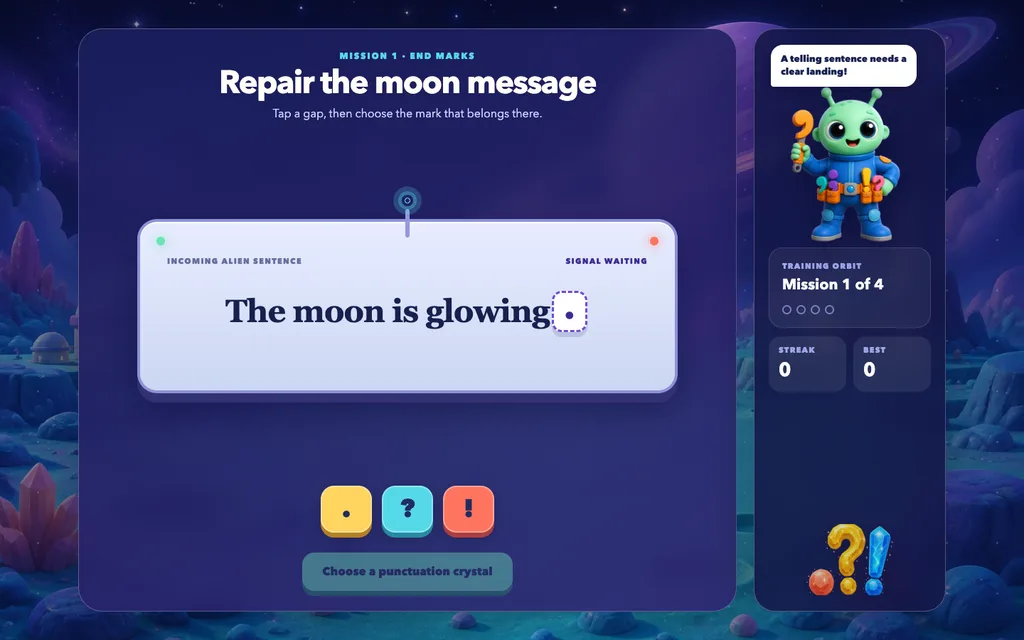 Punctuation PlanetEnglish · Ages 6-11
Punctuation is part of a sentence's meaning: end marks show its intent, commas separate items, and apostrophes show missing letters or ownership.
Times Table ArenaMathematics · Ages 6-11A multiplication fact counts equal groups: a × b is a equal rows with b in each row, and the product is the total across every row.
Area & Perimeter ParkMathematics · Ages 7-12Area counts the square units inside a shape, while perimeter measures the unit lengths around its outside boundary; equal areas can have different perimeters.
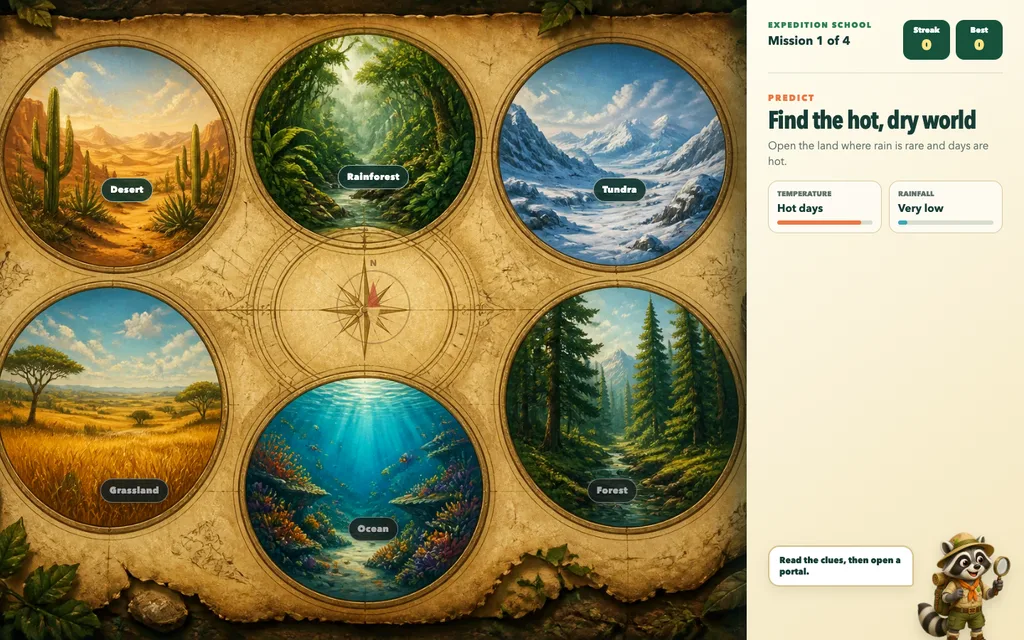 Biome ExplorerScience · Ages 7-13
A biome's long-term temperature and rainfall shape its vegetation, which determines which plants, animals, and food chains can survive there.
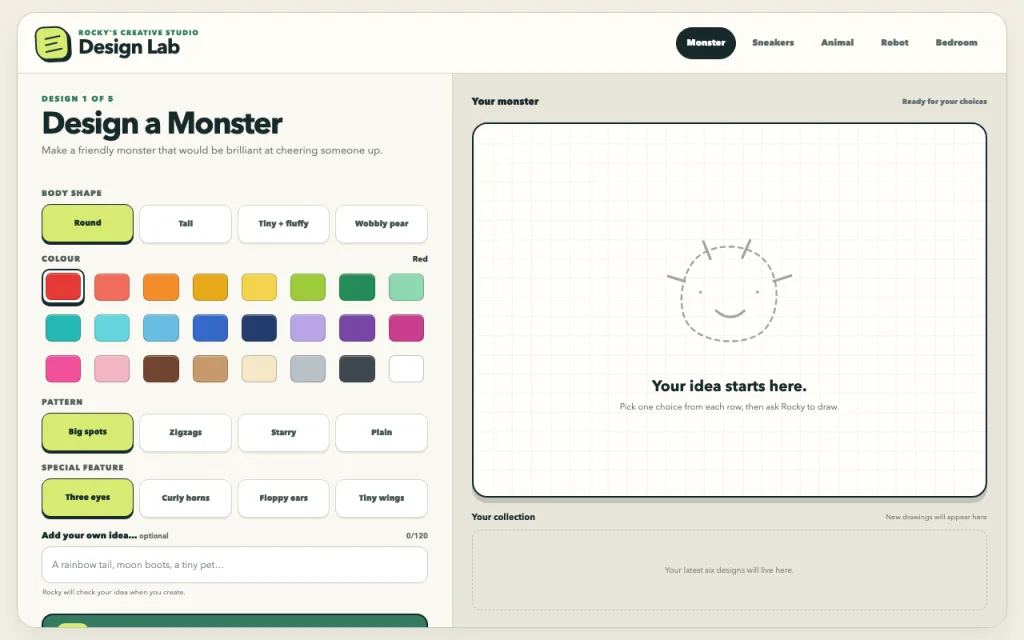 Design LabArt & Design · Ages 7-13
Design is a series of choices that work together to express an idea.
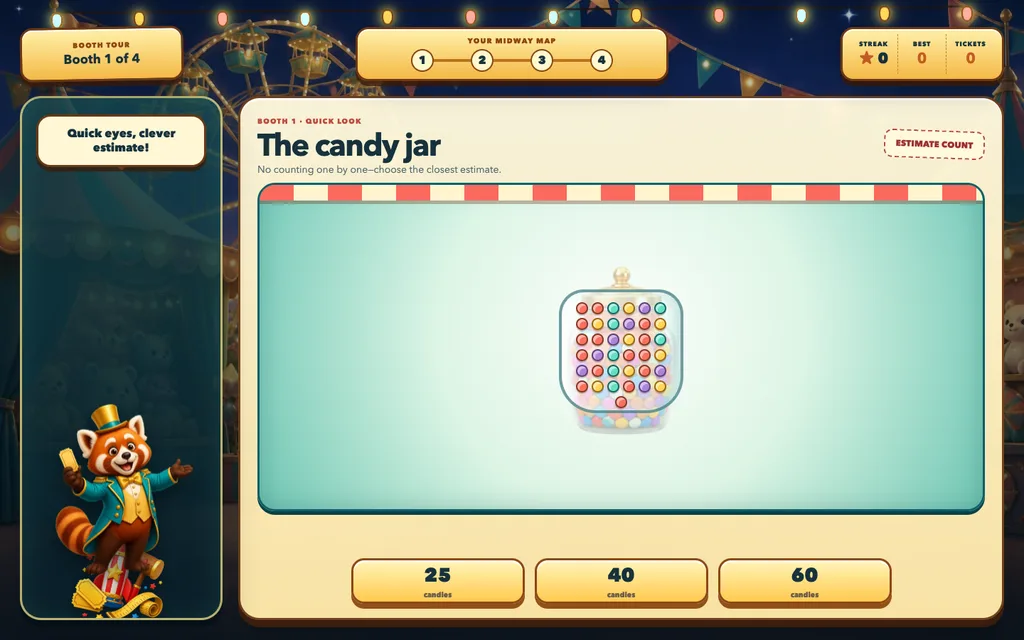 Estimation StationMathematics · Ages 7-12
A useful estimate is a nearby, quick answer made with groups, familiar benchmarks, or rounded numbers; comparing it with the actual result helps us judge whether an answer is reasonable.
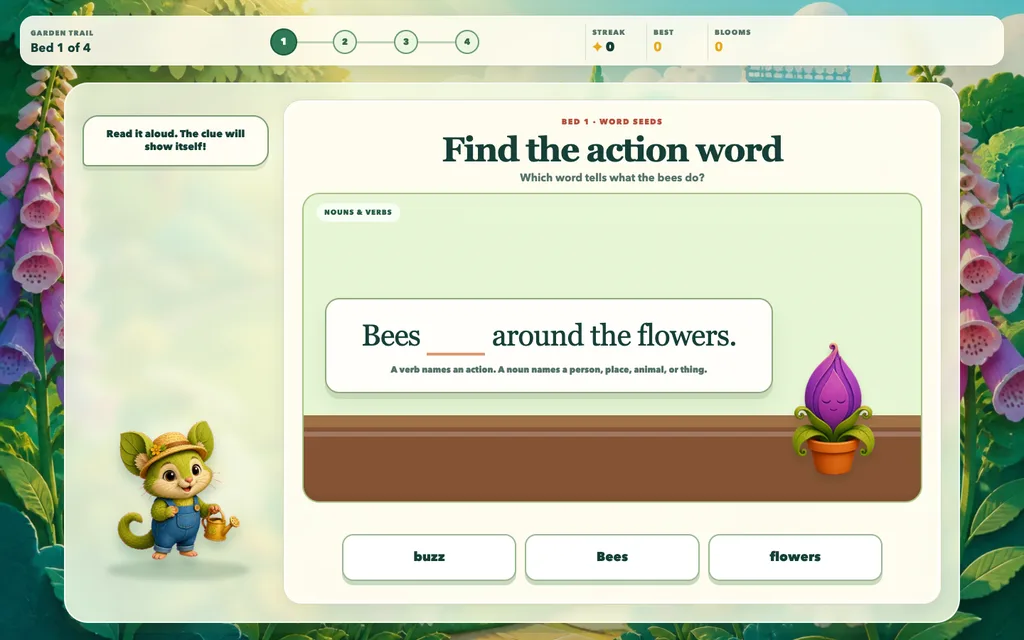 Grammar GardenEnglish · Ages 7-12
A sentence blooms when its words and marks agree with its meaning: the subject controls the verb, time controls the tense, and capitals and punctuation show where ideas begin and end.
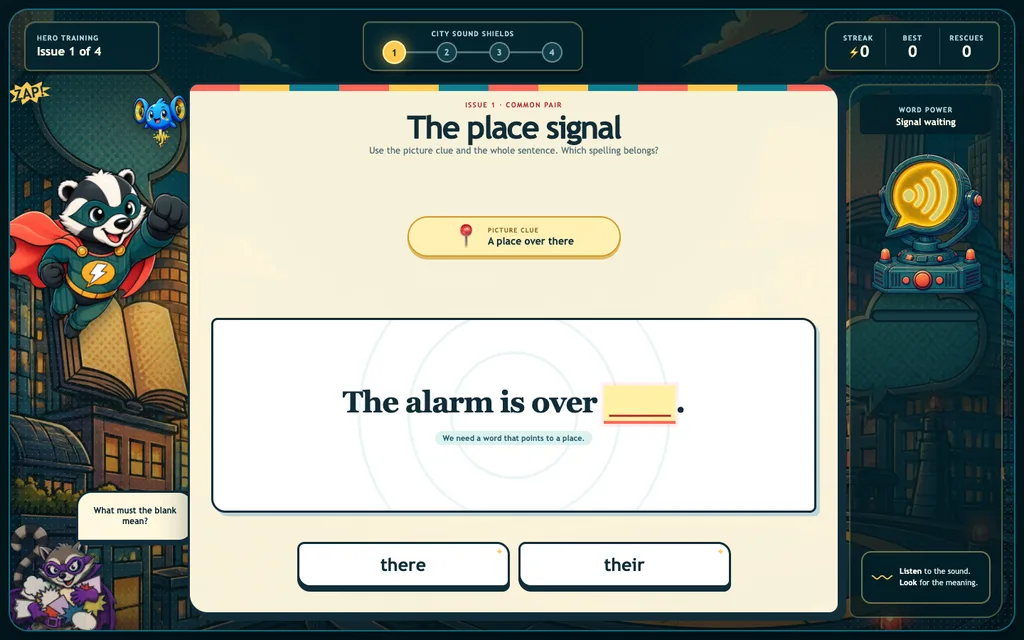 Homophone HeroesEnglish · Ages 7-12
Homophones sound alike but carry different meanings, so the surrounding sentence and picture clue—not the sound alone—reveal the word that belongs.
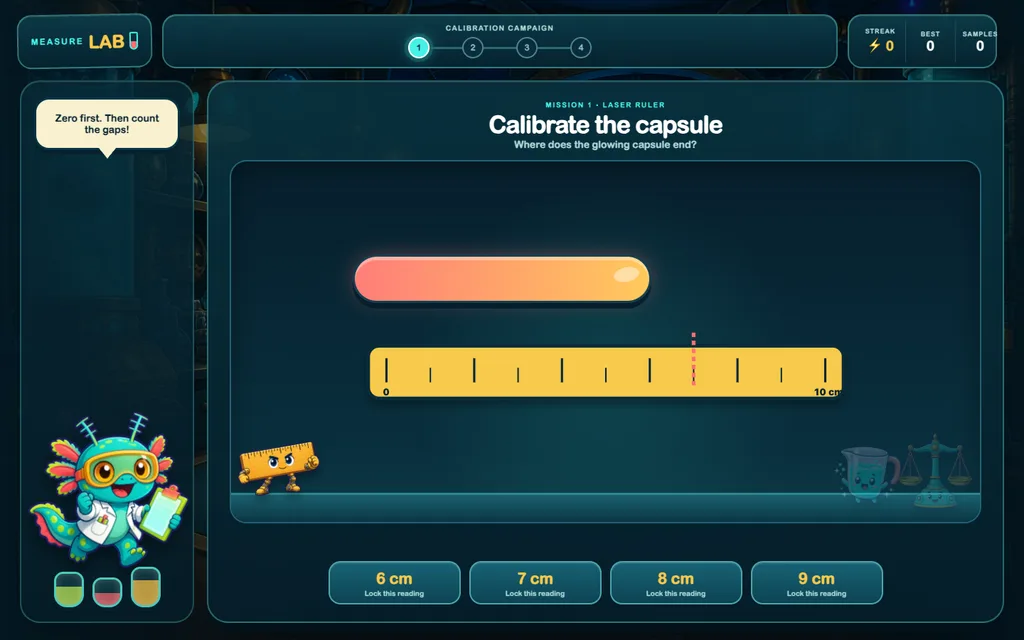 Measure LabMathematics · Ages 7-12
Measurements pair a number with a unit; instrument marks show equal intervals, and converting units changes the number without changing the amount.
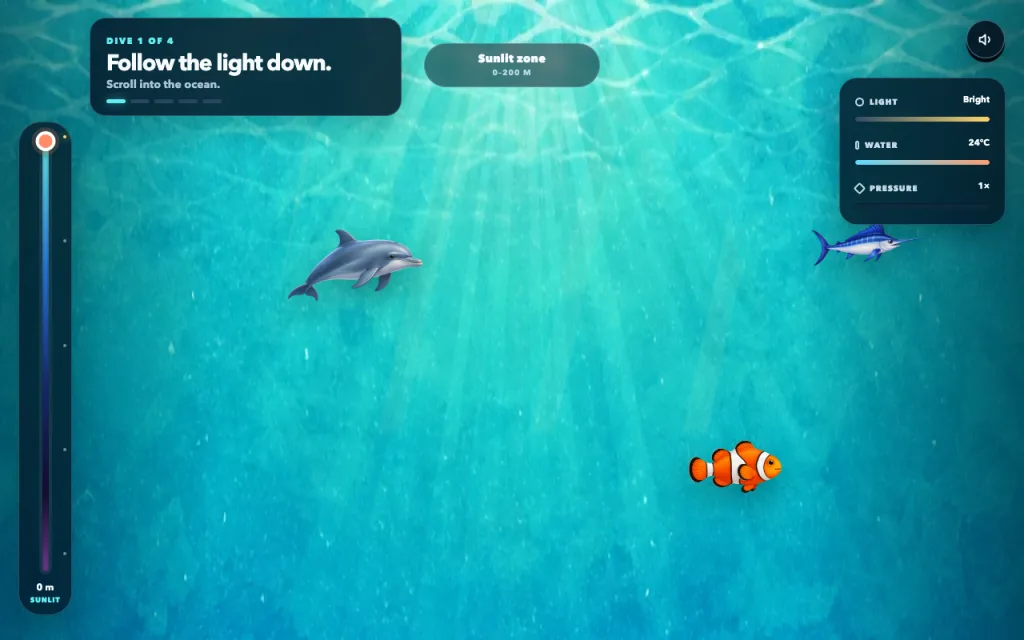 Ocean DeepLife and Earth Science · Ages 7-12
The ocean changes in zones with depth: sunlight fades, temperature falls, and pressure rises, so animals need different adaptations to live at different depths.
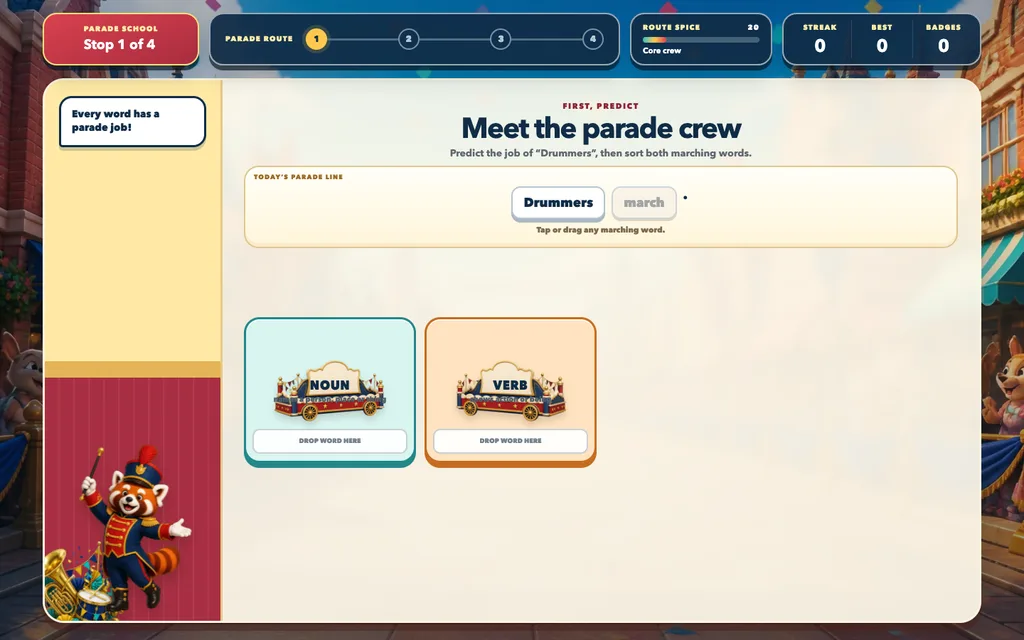 Parts of Speech ParadeEnglish · Ages 7-12
A word's part of speech is the job it performs in its sentence: nouns name, verbs show action or being, adjectives describe nouns, and adverbs modify actions or descriptions.
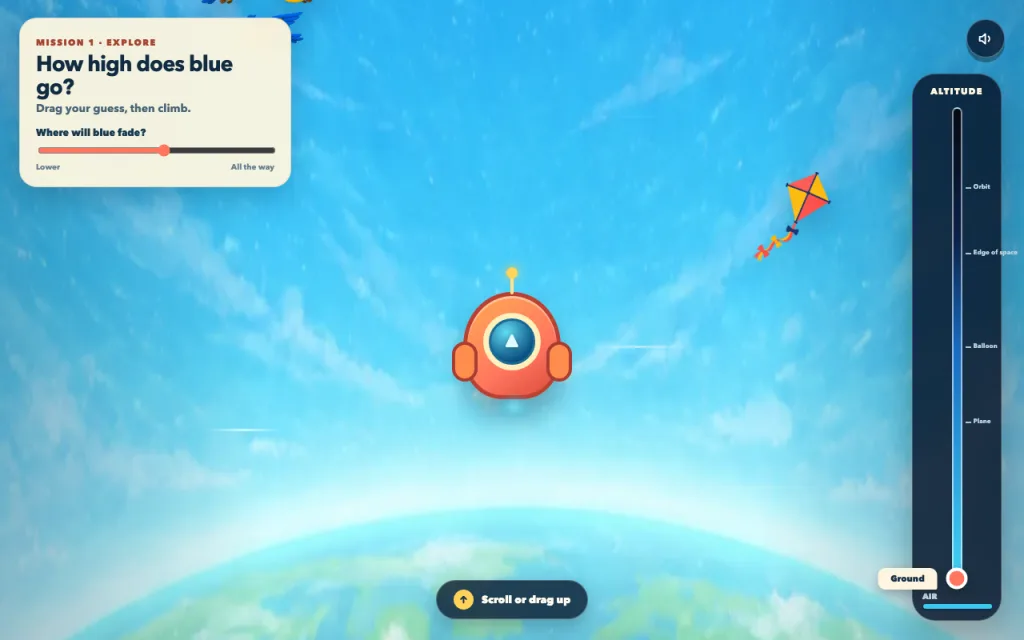 Sky HighEarth and Space Science · Ages 7-12
As altitude increases, Earth’s air gets gradually thinner: birds and airplanes need enough air, balloons rise into thin air, and satellites orbit above almost all of it.
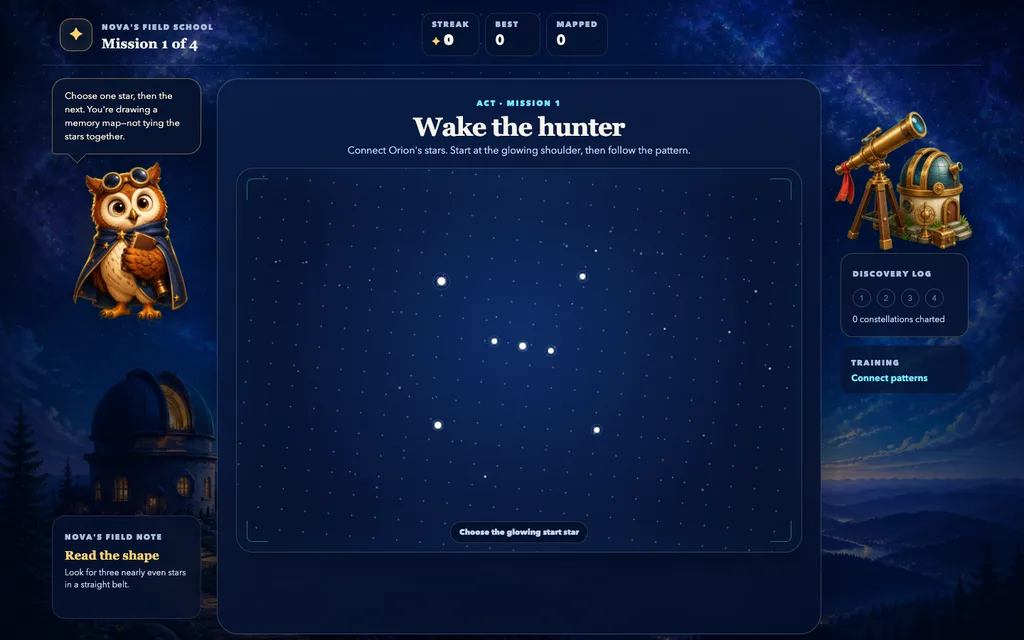 Star MapperScience · Ages 7-13
Constellations are recognizable patterns we see from Earth: their stars are real, but the connecting lines are imaginary guides, and hemisphere and season change which patterns are easiest to find.
Story ProblemsMathematics · Ages 7-12The action in a story tells us which operation connects its numbers; representing that action as a number sentence makes the answer explainable.
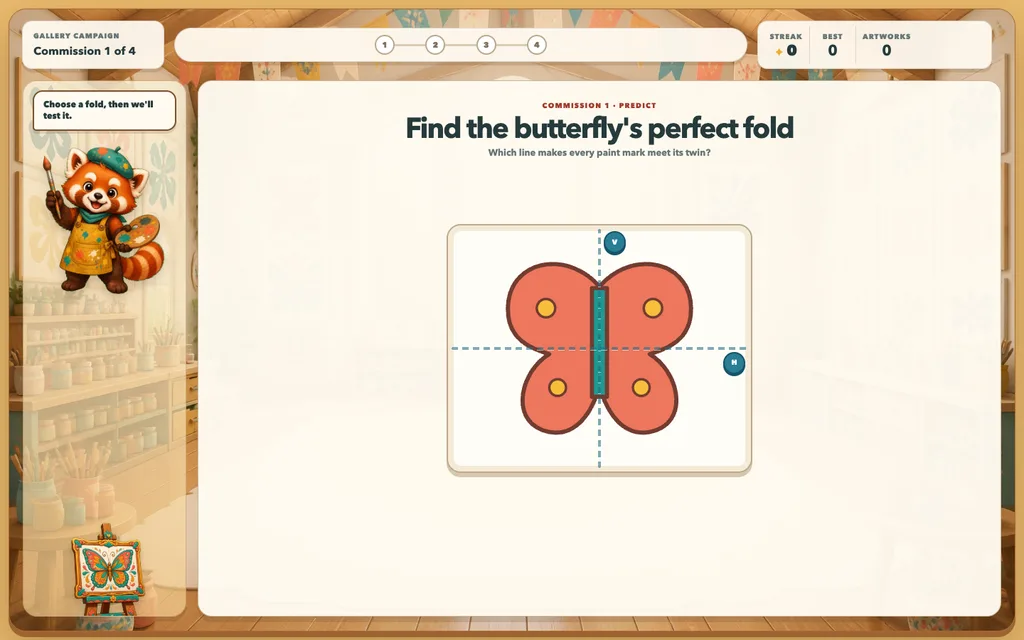 Symmetry StudioMathematics · Ages 7-12
A line of symmetry is a fold line that pairs every point with a matching point the same perpendicular distance on the other side; a shape can have none, one, or several such lines.
Timeline TowerHistory · Ages 7-13A timeline orders events by when they happened: earlier events come before later events, and nearby dates help place events that are close together.
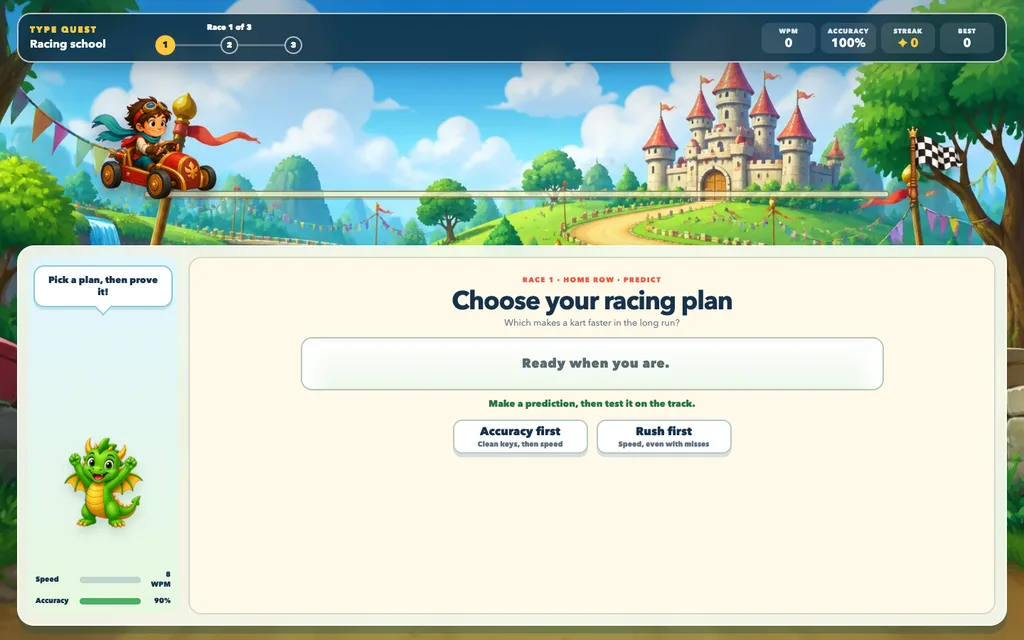 Type QuestTyping · Ages 7-12
Accurate touch-typing builds a smooth, repeatable rhythm; once accuracy holds, speed can rise without losing control.
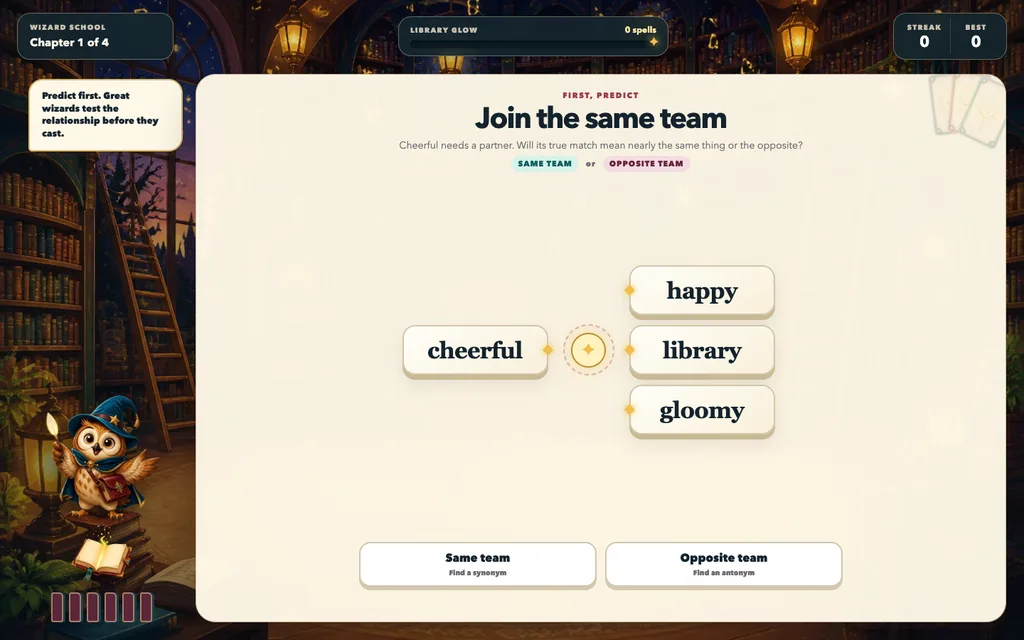 Word MatchEnglish · Ages 7-12
Synonyms share a meaning team, antonyms pull meanings in opposite directions, and near-synonyms can carry different strengths or shades of meaning.
Getting the most out of learning games at this age
- Let them pick the subject — a kid who chose the game fights for it.
- Short and often beats long and rare: 10-15 minutes with a real finish line.
- Ask 'show me how it works' afterwards — teaching you is the best retention test there is.
Common questions
What learning skills should 1st grade learn?
First graders are cracking two codes at once: reading (blending sounds into words) and numbers (adding within 20, tens and ones). The games below cover both, plus the science of noticing — light, sound, what living things need.
Are these games free?
Every Ako lesson here runs in the browser, and your first one is completely free — no account, no card. A subscription unlocks the full catalog of 100+ lessons.
How are Ako lessons different from other learning games?
Ako — a voice AI tutor — is inside every game. He sees what your child does, asks for predictions before they act, and adapts his coaching to their age. Parents get a weekly note about what actually clicked.